I don't have too much to say here, but since I had put it on the to-do list I should make an entry about it.
The Incident was released in Europe in 2011 and released in the U.S. in 2012 as Asylum Blackout. It was Alexandre Courtès', formerly one half of the music video directing duo Alex and Martin, feature directorial debut. Despite the English script and American cast, this seems to be part of the New Wave of French Horror that has been making quite an impact lately. The movement seems to be characterized by gritty realism, extreme graphic violence, and a left-field psychological twist ending. That last one is mostly just my observation from the few movies I've seen.
Asylum Blackout is set in what looks to be the late 80s in an asylum for the criminally insane. It focuses mostly on the kitchen staff at said asylum, who are also in a band together. Their relationship is oddly antagonistic for people who are supposed to be friends, although they do have some good moments where they show that they really are looking out for each other before the insanity begins.
The inciting event here is that there is a very bad storm raging outside that blows out the power at the asylum, which for some reason has no backup generators and I think like 3 security officers. The lights go out, which for some reason triggers a group of inmates led by Richard Brake (he played the creepy pervert in the Doom movie) to riot. They free all the other inmates who proceed to brutally maim and murder the staff.
Most of the meat of the movie is really dark, with a lot of contrast. It makes everything look really sharp and dangerous which lends to the unsafe atmosphere they seem to be going for, but it also makes it really hard to follow sometimes. I quickly found myself disoriented and lost. I didn't know where we were in the asylum, who people were, or what they were trying to do. I was just watching "things" happen. It led to me losing interest and realizing I missed huge swaths of movie that I would then go back to try to rewatch, only to realize I'd actually seen these parts but couldn't tell the scenes apart.
The gore is really convincing and uncomfortable and the setups for the tortures are really deranged. I was doing a lot of "Oh...no...don't do... oh.. just... ew." But that's about all it was. There's no motivation to the inmates' actions except to be cruel and violent, so the writers may be trying to make some point about the senselessness of violence.
The film seems pretty well put together, narratively, but the low lighting made it hard to follow. The extreme brutality without purpose thing has really become quite boring to me at this point, and while I would call it horrific it's just not what I want out of a horror movie. The very end of the movie is also one of those left-field moments that I don't think anyone saw coming. I guess it's supposed to be showing that George's shattered psyche has trapped him forever in some hellish nightmare version of his workplace because of what happened. It's a bit confusing, but probably my favorite part of the movie because of how surreal it is. It's bizarre and actually creepy, instead of just shocking.
If it's your cup of tea, it's probably a very fun watch...but you've been warned about how weird the ending gets.
--PXA
Thursday, July 12, 2012

Monday, July 9, 2012
Horror Off-Season: Absentia
So I have no idea where I first heard about Absentia, or why it took me so long to get to watching it. I'm now grateful to the Netflix shipping glitch that delivered the DVD to me a few days early because after the mind-bending story and gnawing questions of Prometheus and the brutality and left-field ending of Asylum Blackout... Absentia was a breath of fresh scares.
Absentia is an indie horror movie written and directed by Mike Flanagan and released in 2011. And it is one of the best put together indie movies I've seen. It's not without flaws and you can definitely tell it didn't have much of a budget but the movie looks excellent. The soundtrack is practically non-existent but it serves to accentuate the uncomfortable sparseness of the movie.
The basic plot here, trying not to give too much away, is that 7 years ago Tricia's husband Daniel vanished without a trace. 7 years later Tricia is still living in their apartment directly across the street from a pedestrian tunnel under an overpass. She's devoted the majority of her life over the last 7 years to searching for Daniel, as evidenced by the opening shot in which a very pregnant Tricia replaces tattered Missing Person posters around the neighborhood with fresh ones. Tricia's sister, Callie, arrives to help her finalize the paperwork declaring Daniel "Dead in Absentia" and move to a new place. The emotional strain is causing Tricia to have nightmares and hallucinations of a ghastly Daniel with sunken eyes and a gaping silently screaming mouth.
During the days Tricia makes arrangements while Callie goes jogging. On one of these jogs she almost trips over a beat up emaciated stranger played by Doug Jones. This is Walter and he's the first hint we get of a larger plot involving the tunnel.
This is how most of the rest of the movie plays out, Tricia holds the plot thread of Daniel while Callie holds the plot thread of the tunnel. The threads are mostly separate until the sisters come together near the end. After a massive reveal/twist at about the halfway point, the movie becomes a very different kind of supernatural thriller. This 2nd half focuses more on straining the character relationships that have been developed. The movie also starts to tie in existing fairy tales into its mythology, giving it a real urban legend quality. The movie ends with a heroic sacrifice that unfortunately was for naught and closes with a similar sequence to the opening bit with the Missing Person posters, making everything nicely circular...although really depressing.
I really like the scares in this movie, there were pretty slick looking and the editing worked well. There were lots of shots where it seemed like there were two Daniels and that was pretty cool. I also really liked that they weren't punctuated by the sound track in that face-smack way a lot of movies do. I loved the scares in Insidious partially because of the soundtrack, but here it would have seemed silly and out of place since the entire movie is presented with a massive sense of restraint when it came to focus, lighting, and soundtrack.
Absentia isn't a perfect or amazing movie, but it is really good and a nice change from the increasingly violent horror mainstream. It's a great tragic story with well executed scares. The camera work and soundtrack create a atmosphere of brooding depression and strained emotions that really gets under your skin and sits with you for a while. But the cop characters are so awkward they almost don't seem like people. There is an odd subplot involving Doug Jones' character and his son that I wish had gotten more fleshed out, especially given the time they spent with it in the first half of the movie. I felt cheated when it got downgraded to "supporting evidence" status. It's well worth watching and the scares were so good they almost kept me up at night.
--PXA
Monday, July 2, 2012
I'm on the latest Downloathable Content!
Just a quick update:
I'm a guest commenter in this week's Downloathable Content podcast from gamertagged.net. Gamertagged is a gaming blog run by an old friend from college, and still hosts the archives for the GameLandEtc comic I used to color.
For this episode I discuss horror games with Chris and Matt and totally guess the name of a Christopher Walken movie wrong.
Check out:
Downloathable Content #004
I had to finally cave in a buy a headset microphone, this one's pretty comfortable and sounds good. The on-ear controls are a little odd, but it kindof makes me feel like a comm officer in a movie:
--PXA
Thursday, June 28, 2012
Let's talk about remakes
I've briefly mentioned my opinions on horror movie remakes a few times on this site and other forums, but I've never really felt the need to go into detail because it always seemed to me like it would be more of a complainy rant than a well thought out opinion. However, I feel compelled now to make a case for my opinions simply because it doesn't seem like anyone else is and I'm getting a bit tired of the bashing remakes take. Put simply: Remakes deserve consideration. That's it.
Remakes tend to be made for one of two reasons: Translation or subject matter update. A lot of updates are pretty crappy, they're made with the goal of using the notoriety of the original film as a built-in fan base for the new movie. Often, these are lackluster flicks with some superficial nods to the source material: Nightmare on Elm St, Friday the 13th, Prom Night, Texas Chainsaw Massacre, etc. But these are bad because they're straight up bad movies, not because they had the audacity to remake a classic. They are generic, poorly plotted, boring slashers.
It's not that big studios are incapable of making a decent horror movie, or even horror movie update. Dawn of the Dead, Halloween, The Thing, and Fright Night are all decent remakes of older movies. They're not amazing or earth shattering but they don't have to be, but a remake can be amazing. The Thing in 1980 is widely regarded as one of the best horror movies of all time. It's on lists constantly and people keep praising its atmosphere and special effects. Also, it's a remake of the 1951 film The Thing From Another World based on the novella Who Goes There?. What if horror fans at the time had dismissed as just another remake?
Another reason for remaking a movie is to translate the original story into another language. This is the one that seems to inspire the most vitriol. The opinion seems to be that if you are unwilling to watch the movie as originally presented you are somehow unworthy of seeing that story. But for the most part any audience will want to watch a movie in their own language, the original foreign audience as well as our English-speaking audience. There are always subtitles, which is how I watch most of the foreign movies I check out, but I feel like they break the immersion. In horror where the movie's atmosphere counts for so much, floaty words on the screen make me incredibly aware that I'm sitting on my couch and pull me out of the movie. If being remade in English can help someone really get into a great horror story and get creeped out or disturbed, it seems like a perfectly valid reason to make a movie. It shouldn't matter that a movie is a result of someone translating something to their native language, if it's still a good movie.
And some of these are good movies. The Grudge and The Ring were huge hits and make lists of people's favorite horror movies all the time. I've even spoken to a few people who prefer The Ring over Ringu because the production qualities are higher and native English is more comfortable. But still the first thing you hear when someone mentions the upcoming English remakes of Suspiria or Martyrs are Americans ruining great movies. The Suspiria remake is set to star Isabelle Fuhrman, who was absolutely phenomenal in The Orphan, in the lead roll. The slated director, David Gordon Green, has a bit of a reputation for quirky indie comedies but he hasn't failed at horror of any sort yet and his direction seems competent so I'm willing to give him a chance. I'm more interested in speculating about whether or not he's going to ape the visual style or go for something more subtle than just harping on it sight unseen.
That's really my whole point. It's depressingly negative to just prejudge remakes because of something so petty as their language or that they're remakes. Movies should be allowed to suck on their own merits and the "The original was so much better" or "This was way better in the native French/Polish/Sanskrit" arguments sound an awful lot like the hipster complaint that their favorite band is too mainstream now. I just really like this "Horror" thing and it seems self-defeating to spend time talking about a movie's audience instead of the merits of the movie itself.
--PXA
Sunday, May 27, 2012
Horror Off-Season: Chernobyl Diaries
Before we begin, there is one thing that I should probably get out of the way. Whenever I write these movie reviews I try to be as objective as possible. Of course reviews are by nature opinion pieces, and it's impossible to form an opinion of something that isn't colored by personal experience or feelings regarding a given topic. So what I mean is that I try to be as aware of these biases as I can so that when one of them makes me feel a certain way about a movie, I can explain it and not just stumble around trying to claim my opinion is absolute truth.
In the interests of being as clear about my own personal biases regarding the subject matter as I can, I will preface this discussion of Chernobyl Diaries with the fact that I am Ukrainian. Now, I was born and raised in suburban America but I'm 50% Ukrainian by blood. My mother immigrated here when she was 14 and attempted to raise me to at least be aware of my heritage. While I never managed to incorporate the language or culture into my own personal identity (unless a drinking contest is involved), there are aspects of my upbringing that are impossible to get around. Namely, I was born in 1985 and the Chernobyl disaster happened in 1986, well before my first conscious memory. I have literally been aware of what happened since I could understand human language. When I was a kid my mother's church would hold fund raisers for Chernobyl victims in their basement, so I would be there toddling around and being exposed to these science fair-style triptychs of the devastation. I saw photos of abandoned and looted apartments and midways, mutated animals, mutated people...for better or worse these images are a part of my formative years, and nuclear disasters and mutants are some of my earliest nightmares.
So I don't need a movie to show me all the gory details or parade a freak with a melted face in front of me like The Hills Have Eyes did. All it needed to do was say "Pripyat" and establish a credible atmosphere and I will take that ball and run with it, imagining nightmare fuel around every corner. And on that token, Chernobyl Diaries performed admirably.
From a visual aspect the film felt a lot like Cloverfield or Quarantine, using mostly handheld camera shots making you feel like you were another person in the middle of the scene. They also had some great wide shots that really drove home the eerie stillness and isolation of the city. The dialog and pace of the plot was all very frantic keeping you moving along from point to point without too much time to stop and catch your bearings, but it was never too difficult to tell what was going on. There was a point towards the end of the movie where an incredibly creepy looking little girl appeared; before you could really get a good look at her, shit went bananas and everybody had to run again. I lost track a bit there because a roving band of theater hoppers appeared in my 11:30pm showing and started critiquing the characters.
The introduction bits were difficult to get through because the film knew that with as little as it was going to show of the Pripyat inhabitants that it needed to get going as quickly as possible. As such, it felt like we were being forcibly dragged through the first several minutes of the movie, establishing the character relationships. I'm not really sure if it was a bad thing, but I didn't feel like I could really focus on anything until the movie settled into the main storyline.
There were bits where it could be argued that the characters behave retardedly for plot convenience and that no real person would act so stupid, but I didn't see it. Yes, there were instances of information being withheld until after it would've been most important, or just mentioned and brushed aside...but from the perspective of the characters that information did not matter. Even if they had been able to put 2 and 2 together to get 4, it wouldn't have made a lick of difference for their situation. The characters weren't particularly deep, but nobody seemed like an obviously obnoxious stereotype without any other qualities, and the acting was passable enough that everyone felt genuine. That's not to say everyone was memorable or unique, some of them were boring and forgettable, but they felt like real people. Uri is a standout because while I may question his badass credentials, he felt a bit tragic when he was giving the tour.
The group dynamics were a bit chaotic, but can you really blame them given the situation? In the chaos, it also seemed like the movie kindof dropped a few things. There was a moment where one character was bitten pretty badly by some mutant fish, and then nothing is ever made of it again. It's a little odd, but I didn't even think of it until several hours after the movie.
The very end of the movie threw me for a total loop, I think it could've actually benefited from being maybe 5 minutes shorter. It's one of those totally unexpected, very unfair, twist ending sucker punches where they kill the final cast member in like the last frame of the movie in a very cruel way. It was just so sudden and strange that I couldn't really make sense of it. I'm sure there's an audience for that sort of thing since I've seen a lot of other movies and episodes of The Outer Limits end like that, but it just rubbed me the wrong way.
Chernobyl Diaries isn't some grand horror statement, but it is a pretty competently done scary movie. I think that all it was aiming to do was have some fun with an interesting premise and do something exciting, and at that I can't fault it. I know I have a large bias regarding the setting going in, but I don't think that has anything to do with why I think it's not a bad flick. I think that given the subject matter and just a bit of imagination anyone can psych themselves up for a scary movie set in a mini-nuclear wasteland. It is creepier because it really exists.
I enjoyed it, it was a fun movie to watch and it had some very well done scary moments.
Anyway, that's just like...my opinion, man.
--PXA
Tuesday, May 22, 2012
Self-extension, Video game characters, and the horror of discovery... Oh my?
It took me a really long time to write the previous article because I just had too many topics I wanted to bring up, and that led to an over-long and meandering article. I'd still like to discuss them a bit, so while I edited them out of the previous post so it could focus on SCP-087 I'd like to visit some of them now.
Firstly, when I was writing Bro-Horror I became really interested in the nature of horror games vs movies. Video games are in a unique position to tell their stories because you interact with them, it's an active experience instead of a passive one like watching a movie. In a movie you can connect with a well written character and vicariously experience the horror they're going through, but that doesn't quite compare with the depth of connection you have to a player character in a game and the game world. People always talk about the immersiveness of video games, and how a great game can pull you into the story. I think there's also more at play here, because as SCP-087 shows: it's not just the world/story/character, you can immerse a player with nothing but an in-game avatar.
What I'm referring to are the theories of psychologist Gordon Allport (1897 - 1967). Allport was one of the first humanist psychologists, and his theories on personality and self went on to influence other major players like Abraham Maslow and his Hierarchy of Needs. He posited a concept he called "Self-extension", basically that at around age 4 we begin to incorporate external identifiers into our sense of a self. Concepts like "I'm a New Yorker" and "I'm a software engineer", and also why we take damage or slights to our cars or other possessions so personally. There's something really special about controlling the car that really gets people to identify with it. We often take damage to our cars personally, and we talk about things that happen while we're driving without referencing the intermediate vehicle. Think of how often you hear "That guy cut me off!" vs "He cut me off with his car" or some other variant. It can't just be the constant use or the cost because I don't feel like this about my shoes or other property like my computer.
We tend to incorporate the car so far into our sense of self that it becomes part of "us" instead of "ours", and it seems this extends to video game characters. When we talk about video games we always refer to our characters in the 1st person instead of talking about them as characters. If you think about the sentence "So I cleared out all the Medusas." vs "Kratos cleared out all the Medusas." or "I had Kratos clear out all the Medusas.", the first seems more natural. If we're talking about God of War we talk about what we did in the game, not what Kratos did.
It's not surprising with this, that horror games have historically been really effective at creating a lasting connection with players. Some of the bigger games that came out of the PlayStation/PS2 era were survival horror games: Resident Evil, Silent Hill, Clocktower. But more recent AAA titles have failed to recapture that magic, but other people have already contributed enough to why that is. The games that have succeeded have been smaller indie titles. I'm not entirely convinced this has to do with the budgets directly, but comes about as a side effect of where a studio has to focus their energies with the small budgets.
Enter, one of my favorite games: Amnesia: The Dark Descent was released in late 2010 by Frictional Games and was a great hit, even notoriously difficult to please Yahtzee of Zero Punctuation enjoyed the game and said he was scared by it. In the game you are Daniel, a helpless British guy with no memory or so much as a sharp stick to defend yourself with.
The game tells its brutal and Lovecraftian story through flash backs and diary entries that force you, as Daniel, to remember a past that you obviously didn't want to remember. Although at first glance it seems a little trite, the amnesiac protagonist trope does something very useful to the story: it equalizes your knowledge with Daniel's. Even in a game like Skyrim or Fallout where you have a huge amount of customization available, your character has had a rich life before you got ahold of them. That gap will always insulate you from the character, but because both you and Daniel know exactly as much about Daniel's life as he does that element of separation between you and the character is removed.
Amnesia's story is based on the need to know more and what happens when you learn terrible knowledge not meant for man. This theme is present in the game as the Orb, and the Shadow that kills anyone who attempts to learn its secrets. However, it's also present in what happens to you as the player when Daniel learns more about his past. His past was filled with very unsavory things, and as you continue to uncover them you can't help but feel that you didn't want to know that. What's important is that when you learn that Daniel had done these things, you actually feel a little bad about them because Daniel is a part of "you", to some degree. This makes the first play through so uncomfortable, but the affect does diminish.
In the Silent Hill games, particularly Silent Hill 2 because I've never played 1 or 3 at all, James is a fully fleshed out character with a life, personal connections, and flaws to put it lightly. And you know none of it, but the both of you have been placed in the middle of all this craziness that neither of you understands, that similarity can connect you. In this game part of the horror relies on the story, and the connections to James, so they need to have a character they can tack all these flaws on and build a connection to the town into. Those things themselves are disturbing so they can still be scary when they're not internalized to the degree that Daniel's actions were. Also, they're unknown to you at the beginning of the game so when the connection is revealed to you and James there is still some of the horror of discovery because you've both had the same experience in the town.
While it's not related to self-extension, I think the horror of discovery is worth mentioning because it does play such a huge role in making these two games psychologically disturbing, and plays to Amnesia's Lovecraftian theme. While everything in both games is pretty messed up on its own, it's passive: the monsters are just being presented to you. Discovery is active: when you think about the story while you play, and put James' or Daniel's actions into context and discover for yourself how they relate to the situation. You've been forced to participate in the disturbing realization and that really makes it internal to your thoughts...you've been incepted except instead of "break up my father's empire", the idea planted in your head is "James murdered his infirm wife and half the monsters in Silent Hill are manifestations of his own sexual guilt.".
In Dead Space, which is a technically wonderful game that I've yet to get around to finishing, the best and most skin-crawling parts are when I see logs with Dr. Kyne or encounter Mercer. It's that feeling of realizing your trapped in a tin can breached to the vacuum of space with an absolutely insane and truly zealous adherent of some Necromorph religion. Unfortunately, what should have been gut-wrenching tension spent most of the game as frustrated nervousness because everything is a jump scare and Necromorphs kept sneaking into my camera's blind spot and eviscerating me in one blow. I did the same battle probably close to 20 times before I finally got through it, that made it annoying and not scary. The game thought the monsters were creepier than their story, so I had to get through them before continuing the story and that ruined the atmosphere. Nothing takes you out of the immersion like a game-over screen every few minutes for a few hours.
Anyway, those are just some ideas I had. What do you think?
Firstly, when I was writing Bro-Horror I became really interested in the nature of horror games vs movies. Video games are in a unique position to tell their stories because you interact with them, it's an active experience instead of a passive one like watching a movie. In a movie you can connect with a well written character and vicariously experience the horror they're going through, but that doesn't quite compare with the depth of connection you have to a player character in a game and the game world. People always talk about the immersiveness of video games, and how a great game can pull you into the story. I think there's also more at play here, because as SCP-087 shows: it's not just the world/story/character, you can immerse a player with nothing but an in-game avatar.
 | |
| Gordon Allport |
We tend to incorporate the car so far into our sense of self that it becomes part of "us" instead of "ours", and it seems this extends to video game characters. When we talk about video games we always refer to our characters in the 1st person instead of talking about them as characters. If you think about the sentence "So I cleared out all the Medusas." vs "Kratos cleared out all the Medusas." or "I had Kratos clear out all the Medusas.", the first seems more natural. If we're talking about God of War we talk about what we did in the game, not what Kratos did.
It's not surprising with this, that horror games have historically been really effective at creating a lasting connection with players. Some of the bigger games that came out of the PlayStation/PS2 era were survival horror games: Resident Evil, Silent Hill, Clocktower. But more recent AAA titles have failed to recapture that magic, but other people have already contributed enough to why that is. The games that have succeeded have been smaller indie titles. I'm not entirely convinced this has to do with the budgets directly, but comes about as a side effect of where a studio has to focus their energies with the small budgets.
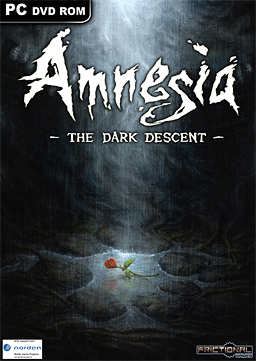 |
| Amnesia: The Dark Descent |
The game tells its brutal and Lovecraftian story through flash backs and diary entries that force you, as Daniel, to remember a past that you obviously didn't want to remember. Although at first glance it seems a little trite, the amnesiac protagonist trope does something very useful to the story: it equalizes your knowledge with Daniel's. Even in a game like Skyrim or Fallout where you have a huge amount of customization available, your character has had a rich life before you got ahold of them. That gap will always insulate you from the character, but because both you and Daniel know exactly as much about Daniel's life as he does that element of separation between you and the character is removed.
Amnesia's story is based on the need to know more and what happens when you learn terrible knowledge not meant for man. This theme is present in the game as the Orb, and the Shadow that kills anyone who attempts to learn its secrets. However, it's also present in what happens to you as the player when Daniel learns more about his past. His past was filled with very unsavory things, and as you continue to uncover them you can't help but feel that you didn't want to know that. What's important is that when you learn that Daniel had done these things, you actually feel a little bad about them because Daniel is a part of "you", to some degree. This makes the first play through so uncomfortable, but the affect does diminish.
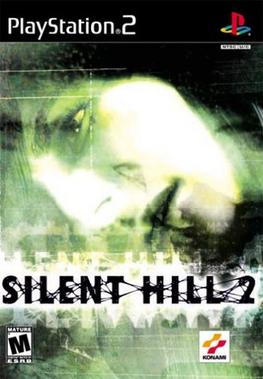 |
| Silent Hill 2 |
While it's not related to self-extension, I think the horror of discovery is worth mentioning because it does play such a huge role in making these two games psychologically disturbing, and plays to Amnesia's Lovecraftian theme. While everything in both games is pretty messed up on its own, it's passive: the monsters are just being presented to you. Discovery is active: when you think about the story while you play, and put James' or Daniel's actions into context and discover for yourself how they relate to the situation. You've been forced to participate in the disturbing realization and that really makes it internal to your thoughts...you've been incepted except instead of "break up my father's empire", the idea planted in your head is "James murdered his infirm wife and half the monsters in Silent Hill are manifestations of his own sexual guilt.".
In Dead Space, which is a technically wonderful game that I've yet to get around to finishing, the best and most skin-crawling parts are when I see logs with Dr. Kyne or encounter Mercer. It's that feeling of realizing your trapped in a tin can breached to the vacuum of space with an absolutely insane and truly zealous adherent of some Necromorph religion. Unfortunately, what should have been gut-wrenching tension spent most of the game as frustrated nervousness because everything is a jump scare and Necromorphs kept sneaking into my camera's blind spot and eviscerating me in one blow. I did the same battle probably close to 20 times before I finally got through it, that made it annoying and not scary. The game thought the monsters were creepier than their story, so I had to get through them before continuing the story and that ruined the atmosphere. Nothing takes you out of the immersion like a game-over screen every few minutes for a few hours.
Anyway, those are just some ideas I had. What do you think?
Friday, May 11, 2012
Horror games only work if you want to keep playing
I don't often discuss games publicly because I just don't feel qualified to talk about most aspects of them with any sort of authority. However, horror games are definitely something I feel like I understand, since I spend so much time talking about horror outside of games.
Recently, someone on reddit.com/r/horror posted a link to a small game based on the horror/creepypasta project called "The SCP Foundation". The game is specifically based on SCP-087, the code name given to a bottomless stairwell located at an unnamed college campus, and is one of the most terrifying games that I have ever played. I'm not lying when I say I lost sleep because of how deeply frightened I was after playing this game for like 20 minutes at 3 in the afternoon. This is despite the fact that it has maybe 3 distinct textures that don't even wrap correctly, no story beyond the SCP itself, and seems to have been made in spare time then released for free by a bunch of guys from 4chan's /v/ board. I noticed something interesting about what exactly made it so compelling and horrifying at the same time and I wanted to talk about it.
SCP-087 is cheap and ugly but it is, knowingly or not, a brilliant exercise in purely experiential gaming. Video games, while generally being pretty immersive always break that immersion in a very fundamental way: You aren't your character. You always know something or see something your character doesn't, and the disconnect is either integral to the story or the gameplay. It's either creating tension by giving the players knowledge of events that affect the character but that the character doesn't know, or assisting gameplay by giving the character knowledge or skill that the player doesn't know about until told. I can't think of very many games that have stories that are told entirely during the run time by what happens to the character. Maybe some of the early FPS games that are more about the run-and-gun experience and don't need more than a very simple story.
The story frames the experience, but a story needs characters so in order to exist in a story you have to have a vessel to act through, and this will always be not-you. The horror you experience in these cases is a lot more like the horror you get when you're really immersed in a movie or a book. It can be really terrifying but there's always a comfort in the fact that it's happening to a character in a story, not you. The eventual resolution of the main plot is also a satisfying experience which gives you a nice payoff.
By doing away with an in-game story SCP-087 has removed the need to have a character for you to act through. By not having any sort of goals, the game no longer needs any of the traditional mechanisms for interacting with the player so it has no options, no HUD, no inventory or anything. With all of this out of the way there's nothing separating you from your in-game self, for all intents and purposes you are in the game and that makes it uniquely terrifying. There's no more disconnect, or comfort because this is all happening to a character.
In most other games, horror or not, the motivation to keep playing the game comes from a desire to reach the end. If a game is too long, without giving us anything new most people will stop playing, but if a game continues to weave new and interesting events into the narrative people will just keep playing. Look to RPGs, especially Mass Effect and Fallout for evidence of this. A game like Amnesia uses this to great effect since as you go on you learn more and more about Daniel's past and experience the dawning realization that Daniel has done horrible things. The very act of continuing the story contributes to the horror of the experience and also has the effect of strengthening the player's resolve to reach the end-game and take revenge on Alexander.
SCP-087 doesn't have an end game, but you keep playing beyond the point where you've seen everything because you want to continue the experience. I had always thought a good horror game relied on a compelling story and a great player character, with mechanics and visuals that supported the themes of the game, but now it seems like everything else is just a means to an end because you can have a truly terrifying game without any characters or story.
This just goes to further my theory that major studios simply can't produce a good horror game anymore, because how on Earth would you market a game without characters or a story?
Games are weird, man.
--PXA
Subscribe to:
Posts (Atom)
