Ok, so this isn't the video game writing I normally do, but I felt like I needed to write something about my experience around this game. I'm still working on another beer article, but motivation is scarce. This has been on my mind a lot lately and I wanted to get it out there quickly, so this is a barely editing accounting of my experience buying and playing The Last of Us. I'll admit to not being very far in the game, but there's a reason for that.
So The Last of Us is a Playstation 3 exclusive game developed by Naughty Dog, and it was released in the US on June 14th. I ordered the game on June 15th via some odd configuration of eBay and newegg which I saw posted on reddit.com/r/gamedeals. I'm generally a patient gamer but the hype around the game and the fact I could get it for an entirely reasonable price made me go for it. I got the game on the 18th with plans to play it the evening of the 19th.
Knowing the game was going to need to be updating immediately, I put the disc in and told it to download and install the patch. My 6 months of PS3 ownership have taught me that the PS3 is now going to be absolutely useless until it's done which could be upwards of an hour from now. So later that night I went to check on the status and it was done. It was too late to play, so I turned off the console.
The next day, I went to play the game after work only to discover that my PS3 controller had run down its battery. I'm told that keeping a USB hub near your sofa to charge your PS3 controllers is all the rage nowadays, but I've apparently not kept up with the times and the closest place for me to charge my controller is the PS3 itself using the 3 foot cable that ships with the console. My hopes dashed, I plugged the controller in to charge and played some Mass Effect on Xbox.
The next day I went again to play using my freshly charged controller. Starting the game yields a loading screen for a few minutes before bringing up the menu which was peaceful, yet sparse and showing signs of decay. Selecting new game yields another loading screen. This one is all black apart from some sparkles that look like they could turn into the PS3 main menu at any point. After a minute or two some "Loading..." text appears in the bottom right corner with a percentage that slowly climbs. When the percentage finally reaches 100%, the loading screen starts it again. A few more 0-100 runs of the "Loading..." text and the opening cinematic finally begins.
So I play the game, and it's pretty well done. A little heavy on the cutscenes, but still not bad. Then I start to get into the main part of the gameplay and realize I'm really bad at this. But I'm not bad at this because I don't understand what to do, I'm bad at this because the control scheme is fucking me up. I feel like the game really demands I know the controls pretty immediately. I find whenever I try to be really stealthy I'll be trying to sneak up on a guy and then football victory-check a brick directly into the ground or lunge at the empty space next to someone. It's pretty frustrating. And if there's more than 2-3 bad guys I'm generally better off just starting a huge fight and beating everyone to death with a board instead of taking them out one at a time. I tried to take out that fucking Clicker in the beginning of the MBTA station level right before the Goldstone building like 4 times and failing at it before I just shot it in the head a few times then Molotov'd the mob that ran in. That pissed me off because that is not how I want to play this game.
Rewinding a bit, a few hours before that point I decided I want to save, in case I was about to do something totally boneheaded and I didn't want to restart the entire section. Now I stare at a message saying "Autosaving still in progress" for a minute, then an unresponsive options menu for a bit with several messages about Autosaving before finally being allowed to select a savegame file. It's around this point that my girlfriend casually quips, "This got 10 out of 10?"
I want to bring this up in relation to a 9 out of 10 game that I played on the Xbox 360: Batman Arkham City.
I bought Arkham City several months after release date from a gamestop and brought the disc home. I put it into the Xbox and turned on the controller. I don't think the controller had been dead, but if it had I have plenty of rechargeable batteries around because I use them in: My wireless mouse, other Xbox controllers, digital cameras, digital scale, TV remote control, my brewing thermometer, and a few other things I'm sure I've forgotten.
I intend to play the game tonight, but am greeted by an update screen. Which is no big deal to me, I know that historically the Xbox will finish updating in under a minute. My experience has not led me astray and the game is ready to play and at the menu before I can think about how uncomfortable my couch is. I start a new game and with less than 30 seconds of loading, the opening cinematic starts. I then proceed to play the fuck out Arkham City and continually revisit the game.
This experience also applies to every Xbox 360 game I have played: Mass Effect, Left 4 Dead, Alan Wake, Assassin's Creed(s), etc, while a similar "Oh Gods I hope it doesn't need to update" scenario unfolds every time I try to play something on the PS3.
Now the point:
I firmly believe that the strength of a console lies in its games. Graphics and capabilities are generally equal and have been for a generation or two, so the exclusives and online services are where the difference is made. I am not a Xbox fanboy or part of the PC master race. But, I find the PS3 and incredibly inconvenient console to use. It seems like there is no such thing as deciding to play a game and then playing it on the PS3. The console feels replete with loading screens and saving progress bars. If there is an update, you might as well cancel your plans. And the lack of replaceable batteries in the controllers will never fail to aggravate me. It's a wireless freaking controller, it feels like it's missed the point if I have to plug it in to use it.
I firmly believe the experience of The Last of Us is being hindered by its console exclusivity. I think the PS3 is holding me back from really enjoying the game and that sucks. I'm not going to say I'd be able to control it better if I were on a PC or Xbox 360, that's unfair. But the time and waiting I had to put into playing the game at all, and the time I need to spend waiting for the game to be ready for me to play it every single time I want to really saps the enjoyment. This is compounded by the fact that the platform seems to continually pull me out of the game whenever I save.
I'm hoping they eventually port this because I'd like to see how it fairs without the PS3 getting in the way because it really feels like it does.
Showing posts with label gaming. Show all posts
Showing posts with label gaming. Show all posts
Saturday, June 22, 2013

Thursday, January 31, 2013
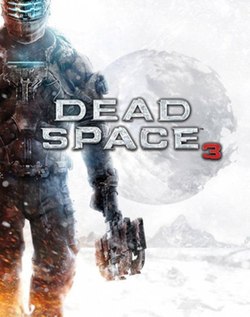
Dead Space 3 demo, Addendum
I just realized I forgot to make one major point which was the parts based crafting system. They've touted the hell out of it and it's not as confusing as I was worried it would be. It's generally pretty sensible and is just customizable enough to be unique and cool. I'm sure it will be a bit more daunting in practice when they don't front load you with a lot of resources but it makes a lot more sense than the blue print/store system from earlier games. I had always wondered in that situation 1) Why they would even sell vital supplies like health, air, guns, ammo, armor on a ship like the Ishimura and 2) What's to prevent Isaac, with his engineering prowess, from hacking the freaking things to give him free shit? Needing a certain part removes these because now you're not buying what you need from a store, you're really building it and improvising a weapon using parts and a work-bench. It's kindof cool.
Wednesday, January 30, 2013
The Dead Space 3 demo
I know I'm a bit late to the game but I finally got a chance to play the Dead Space 3 demo on Xbox. Most of this post is going to be mentions of things I noticed while playing. Some items will be discussed at more detail, but not all.

The first thing I notice is the interesting change in menu style. Previous Dead Space installments used a menu style evocative of a RIG-style computer interface with a nebulous background of shifting tones and shapes. 3's menu panels are on large cross-sectional slices of what appears to be a necromorph or some other organic thing frozen in a block of ice. I suppose if I were trying to read into it I'd draw a parallel between the more concrete and grounded menu system with the terrestrial basis of the game. Dead Space 1 was entirely in space except for the last level and so far Dead Space 2 has been all in space as well (You can follow that playthrough on youtube). Either way, it's got a lot of motion and is very cool to watch although I can see possibly being annoyed at the length of some of the animations.
Immediately after the menus I noticed the focus on music. The previous Dead Space installments used music as a background element, and they were very effective with it. The menu is subtle and unnerving but very much ambient, it's tense in the battle scenes and generally serves purpose...but I couldn't hum you the Dead Space theme. This new game puts the music front and center with a discernible theme in the menu, however it sounds like a poor man's Batman theme (Nolan era films, possibly including Arkham games). Not that it's bad since it's a great theme and other recent movie themes have lifted from it somewhat and it's possible it lifted its inspiration from something I can't recall, it's just very reminiscent and I couldn't stop noticing it.
Onto the actual gameplay, the game begins with Isaac pulling a Luke in the Wampa cave. Apparently he somehow ended up upside down when his ship crashed following Dead Space 2. Isaac is either the unluckiest or the LUCKIEST S.O.B. ever. He keeps running into these Necromorph outbreaks and somehow surviving them. Deciding he's the unluckiest, he assumes that if he survived everyone else is probably safe and begins to look for them.
I don't know that I can take full credit for this as I already saw Chris of gamertagged notice that Isaac shields his face with his hand while wearing his face-shielding helmet in the snow storm.
The early game in general is a lot more linear that previous installments, I barely felt like activating the beacon. The outdoor texture is quite well done and they have an interesting looking snow effect for when you're walking, though I do hope they make it look less lumpy for the final release. The footprints look good. It's a nice way to conceal the borders of the level, but I think in some spots they go overboard. There are a few spots where you can see the path really well, then take a few steps forward and now the snow is everywhere and you can't see more than 3 feet. It's not time based because it doesn't go away until you back up.
The physics system for loose objects on the ground has been upgraded, though still seems a little rough. This game involves the standard "Isaac stomp all boxes on the ground to receive goodies" mechanic, but the boxes are a bit more jiggly than they used to be. Stomping can sometimes just move the box. Also, the engine is so picky that when Isaac raises his foot to do said stomp, it can result in kicking the box like a soccer ball. At one point Isaac just straight up punted a box off the side of a cliff because of this. It was actually really funny.
The quicktime events the game uses are interesting. I had to do the opening one where you climb through the falling vehicle cab 3 times because I was having a hard time figuring out if the panicked and flashing buttons meant to tap, hold, or spam. The arrow for which direction to push the joy stick is hard to pick out until you realize what it means and the constant flashing is confusing. It turns out you HOLD the joystick even though it's flashing and spam the buttons because it's flashing.
The snowy terrain leads to some interesting potential where enemies literally pop up through the snow, but since this is Dead Space I have the sense they're going to beat the gimmick like a red headed step-child. The enemies are more charred looking and smaller than enemies in previous Dead Space games. They're all wearing snowsuits and from what I remember don't have many extra limbs. Some enemies will break in half causing 3 huge tentacles to spew from their waist. I'm not sure if this is because of a specific kill type or enemy type since there's a lot less differentiation...or the demo primary included this enemy type with a few variations. There are also pure human enemies due to the planet magically being a Unitology stronghold or something. There are some humans who are neutral to you and another faction that wants you dead. Also the necromorphs.
Initially the game invited a lot of comparison to John Carpenter's The Thing, and I kindof wanted to think it too, especially when I first ran into the co-op character but I can't see it happening. The Thing is all about slow tension and paranoia, a sense of isolation. With as much action as the series involves at this point I don't think they could pull it off. First off, Carver is the other player character. They simply couldn't have the character betray Isaac or be implied to be an enemy which removes the paranoia that could result from not knowing if your friend was really on your side. Sure they can do this with some of the other characters, but we're kindof used to that twist by this point in the series...it's happened in every game so far. Also, there are so many necromorphs, and random human allies and enemies that show up and fight you or shout and die by a scripted event that I don't feel isolated at all as Isaac. I feel like Doomguy. It's finally gotten to the point where I am no longer even pretending to cautiously move down a hallway. I am Isaac-Fucking-Clarke with advanced degrees in engineering YOUR ASS TO BE KICKED!!!!!!RAAARGH!!!!1oneshift
I'll still have to decide if the game is worth buying initially. I kindof want to play it on Let's Drink to Gaming, but I don't know if it's worth it. EA's doing a lot of stupid stuff around the game that I don't want to support so I may wait a few months until it goes on sale. Another option would be buying it and immediately marathoning the whole thing in a single sitting live on twitch.tv. That's sort of outlandish and would probably take 12 hours or more given the times on howlongtobeat.com for Dead Space 1 and 2. Maybe I'll ask twitter to see if there's interest in it.
Anyway, that's what I thought of while playing the demo. Take from it what you will.
The first thing I notice is the interesting change in menu style. Previous Dead Space installments used a menu style evocative of a RIG-style computer interface with a nebulous background of shifting tones and shapes. 3's menu panels are on large cross-sectional slices of what appears to be a necromorph or some other organic thing frozen in a block of ice. I suppose if I were trying to read into it I'd draw a parallel between the more concrete and grounded menu system with the terrestrial basis of the game. Dead Space 1 was entirely in space except for the last level and so far Dead Space 2 has been all in space as well (You can follow that playthrough on youtube). Either way, it's got a lot of motion and is very cool to watch although I can see possibly being annoyed at the length of some of the animations.
Immediately after the menus I noticed the focus on music. The previous Dead Space installments used music as a background element, and they were very effective with it. The menu is subtle and unnerving but very much ambient, it's tense in the battle scenes and generally serves purpose...but I couldn't hum you the Dead Space theme. This new game puts the music front and center with a discernible theme in the menu, however it sounds like a poor man's Batman theme (Nolan era films, possibly including Arkham games). Not that it's bad since it's a great theme and other recent movie themes have lifted from it somewhat and it's possible it lifted its inspiration from something I can't recall, it's just very reminiscent and I couldn't stop noticing it.
Onto the actual gameplay, the game begins with Isaac pulling a Luke in the Wampa cave. Apparently he somehow ended up upside down when his ship crashed following Dead Space 2. Isaac is either the unluckiest or the LUCKIEST S.O.B. ever. He keeps running into these Necromorph outbreaks and somehow surviving them. Deciding he's the unluckiest, he assumes that if he survived everyone else is probably safe and begins to look for them.
I don't know that I can take full credit for this as I already saw Chris of gamertagged notice that Isaac shields his face with his hand while wearing his face-shielding helmet in the snow storm.
The early game in general is a lot more linear that previous installments, I barely felt like activating the beacon. The outdoor texture is quite well done and they have an interesting looking snow effect for when you're walking, though I do hope they make it look less lumpy for the final release. The footprints look good. It's a nice way to conceal the borders of the level, but I think in some spots they go overboard. There are a few spots where you can see the path really well, then take a few steps forward and now the snow is everywhere and you can't see more than 3 feet. It's not time based because it doesn't go away until you back up.
The physics system for loose objects on the ground has been upgraded, though still seems a little rough. This game involves the standard "Isaac stomp all boxes on the ground to receive goodies" mechanic, but the boxes are a bit more jiggly than they used to be. Stomping can sometimes just move the box. Also, the engine is so picky that when Isaac raises his foot to do said stomp, it can result in kicking the box like a soccer ball. At one point Isaac just straight up punted a box off the side of a cliff because of this. It was actually really funny.
The quicktime events the game uses are interesting. I had to do the opening one where you climb through the falling vehicle cab 3 times because I was having a hard time figuring out if the panicked and flashing buttons meant to tap, hold, or spam. The arrow for which direction to push the joy stick is hard to pick out until you realize what it means and the constant flashing is confusing. It turns out you HOLD the joystick even though it's flashing and spam the buttons because it's flashing.
The snowy terrain leads to some interesting potential where enemies literally pop up through the snow, but since this is Dead Space I have the sense they're going to beat the gimmick like a red headed step-child. The enemies are more charred looking and smaller than enemies in previous Dead Space games. They're all wearing snowsuits and from what I remember don't have many extra limbs. Some enemies will break in half causing 3 huge tentacles to spew from their waist. I'm not sure if this is because of a specific kill type or enemy type since there's a lot less differentiation...or the demo primary included this enemy type with a few variations. There are also pure human enemies due to the planet magically being a Unitology stronghold or something. There are some humans who are neutral to you and another faction that wants you dead. Also the necromorphs.
Initially the game invited a lot of comparison to John Carpenter's The Thing, and I kindof wanted to think it too, especially when I first ran into the co-op character but I can't see it happening. The Thing is all about slow tension and paranoia, a sense of isolation. With as much action as the series involves at this point I don't think they could pull it off. First off, Carver is the other player character. They simply couldn't have the character betray Isaac or be implied to be an enemy which removes the paranoia that could result from not knowing if your friend was really on your side. Sure they can do this with some of the other characters, but we're kindof used to that twist by this point in the series...it's happened in every game so far. Also, there are so many necromorphs, and random human allies and enemies that show up and fight you or shout and die by a scripted event that I don't feel isolated at all as Isaac. I feel like Doomguy. It's finally gotten to the point where I am no longer even pretending to cautiously move down a hallway. I am Isaac-Fucking-Clarke with advanced degrees in engineering YOUR ASS TO BE KICKED!!!!!!RAAARGH!!!!1oneshift
I'll still have to decide if the game is worth buying initially. I kindof want to play it on Let's Drink to Gaming, but I don't know if it's worth it. EA's doing a lot of stupid stuff around the game that I don't want to support so I may wait a few months until it goes on sale. Another option would be buying it and immediately marathoning the whole thing in a single sitting live on twitch.tv. That's sort of outlandish and would probably take 12 hours or more given the times on howlongtobeat.com for Dead Space 1 and 2. Maybe I'll ask twitter to see if there's interest in it.
Anyway, that's what I thought of while playing the demo. Take from it what you will.
Tuesday, January 1, 2013
2013, Hello, how are you?
I had originally intended to write this around Christmas time to explain the radio silence on the site, but the holidays just get so incredibly busy I just couldn't find the time. So it's pretty late on New Year's Day and I figure I can write this pretty quickly.
2012 was a helluva year, it was the year I started trying to be a lot more regularly active on this site, writing the articles on Bro-horror and the video game articles about SCP-087 and Self-extension and the horror of Discovery. Also, a ton of movies.
The House at the end of the Street was probably the most disappointing movie I'd seen. I really ripped into it, and that may not have been fair but if I had seen this movie on Netflix instant I would have wandered off or found something else to watch.
I didn't write a full post about it, but The Woman in Black impressed the hell out of me. It was a bit of a comedy of errors trying to watch it, but on the 2nd attempt we got all the way through it and it was a great old-school horror movie. It had a lot of Thing-In-The-Background, Weird-Shape-In-The-Storm styles of scares. Almost no jump scares and false scares used well. I wasn't making nearly as many "Oh look it's Harry Potter" jokes as I was expecting, since the acting was actually not half-bad. I'm planning on getting this on DVD/Blu-Ray.
In other news I also went to the National Homebrewer's Convention this year. It was a wonderful experience, and also very educational. The 2013 Convention is going to be in Philly, and as usual you need an American Homebrewer's Association membership. If you brew ANYTHING, vinegar, kombucha, beer, wine, sake, etc. you should get an AHA membership. It's not expensive and they are doing good things for homebrewer's across the country.
Also in beer I made the official change to all-grain brewing and started kegging my homebrew. Kegging is much more satisfying than bottling, it's a worthwhile switch. In 2013 I'm switching from a braid filter to a false bottom. I recently re-attempted the Chocolate Orange Stout, but won't get to try that until 2013 as well. I'm also anticipating some sours beginning this year.
2012 also saw me traveling much more than I ever have before. As mentioned the NHC was in Seattle, so I had to fly there. I also went to Florida twice, once in February to visit my folks on vacation and then again in October for Halloween Horror Nights in Universal Studios. It was an incredible collection of haunted houses. The whole thing teemed of some very annoying people, but with a speed pass it was possible to see everything. All the haunted houses followed the same basic formula, which really good in some haunts and not so well in others but it was all really professional quality. I can only imagine the show will get better in 2013, though I'll probably get a multi-night pass and spread the visit out a bit.
However, one of the main reasons I haven't been writing as much is that I started a Youtube Channel. Currently the only show is is "Let's Drink to Gaming", which is a Let's Play-style show with themed cocktails. Check it out, the edges are still rough but the quality is improving. There are a few more things in planning, so stay tuned. It'll hopefully be interesting.
Anyway, that's some stuff that's been going on. Now I need to start getting used to writing 2013 on my checks.
--Phil
2012 was a helluva year, it was the year I started trying to be a lot more regularly active on this site, writing the articles on Bro-horror and the video game articles about SCP-087 and Self-extension and the horror of Discovery. Also, a ton of movies.
The House at the end of the Street was probably the most disappointing movie I'd seen. I really ripped into it, and that may not have been fair but if I had seen this movie on Netflix instant I would have wandered off or found something else to watch.
I didn't write a full post about it, but The Woman in Black impressed the hell out of me. It was a bit of a comedy of errors trying to watch it, but on the 2nd attempt we got all the way through it and it was a great old-school horror movie. It had a lot of Thing-In-The-Background, Weird-Shape-In-The-Storm styles of scares. Almost no jump scares and false scares used well. I wasn't making nearly as many "Oh look it's Harry Potter" jokes as I was expecting, since the acting was actually not half-bad. I'm planning on getting this on DVD/Blu-Ray.
In other news I also went to the National Homebrewer's Convention this year. It was a wonderful experience, and also very educational. The 2013 Convention is going to be in Philly, and as usual you need an American Homebrewer's Association membership. If you brew ANYTHING, vinegar, kombucha, beer, wine, sake, etc. you should get an AHA membership. It's not expensive and they are doing good things for homebrewer's across the country.
Also in beer I made the official change to all-grain brewing and started kegging my homebrew. Kegging is much more satisfying than bottling, it's a worthwhile switch. In 2013 I'm switching from a braid filter to a false bottom. I recently re-attempted the Chocolate Orange Stout, but won't get to try that until 2013 as well. I'm also anticipating some sours beginning this year.
2012 also saw me traveling much more than I ever have before. As mentioned the NHC was in Seattle, so I had to fly there. I also went to Florida twice, once in February to visit my folks on vacation and then again in October for Halloween Horror Nights in Universal Studios. It was an incredible collection of haunted houses. The whole thing teemed of some very annoying people, but with a speed pass it was possible to see everything. All the haunted houses followed the same basic formula, which really good in some haunts and not so well in others but it was all really professional quality. I can only imagine the show will get better in 2013, though I'll probably get a multi-night pass and spread the visit out a bit.
However, one of the main reasons I haven't been writing as much is that I started a Youtube Channel. Currently the only show is is "Let's Drink to Gaming", which is a Let's Play-style show with themed cocktails. Check it out, the edges are still rough but the quality is improving. There are a few more things in planning, so stay tuned. It'll hopefully be interesting.
Anyway, that's some stuff that's been going on. Now I need to start getting used to writing 2013 on my checks.
--Phil
Monday, July 30, 2012
Combat's place in horror games
I got a lot of flack from a few people for disparaging Dead Space as much as I did and engaging in the typical exalting of the early Silent Hill installments last time I talked about games. In the first post, the bit about Dead Space was mainly a footnote so I didn't really explain myself. I never wanted to leave something like that without a good explanation, because that's not fair to the game. But in seeking to flesh out my stance on Dead Space, I started thinking a lot about combat in general since it tends to be such a contentious aspect of horror games.
For the sake of this exercise let's define combat as your single player-character in a direct, weaponized altercation with one-to-n enemy combatants. This should be broad enough to encompass everything I want to talk about while excluding squad-based combat and other non-first person forms of combat.
Combat is obviously the core gameplay mechanic in games like Modern Warfare, Call of Duty, God of War, Prototype, and all their forefathers. Even games like Arkham City and Arkham Asylum where navigation and puzzle-solving often take center stage, combat is a huge mechanic and part of what makes these games notable. And in all these games the purpose of combat is to serve the emotional engagement of making the player feel like a badass (or in the Arkham games: Batman, the ultimate badass). That's what they're for. These games all serve to immerse the player in an environment where they can experience the visceral joy of dominating one's opposition without moral ambiguity.
However, the same sort of combat exists in the survival horror genre in games like Resident Evil, Silent Hill, Dead Space, etc. A lot of these games are about that moral ambiguity, they force the player to make uncomfortable decisions or confront uncomfortable reality. There is no visceral joy to be had here, yet they still involve combat. So in this genre, combat isn't around to make you feel like a badass but why is it around? An easy theory is that combat exists in survival games to place a strain on your resources which forces you to ration instead of simply horde. Without something depleting your supply of ammunition and health restoration items, the game simply doesn't have the stress factor involved with making sure you have enough of everything to make it to the end, which is a significant amount of the point.
While this is true, I think there's deeper engagement. First, the focus on resource maintenance inherent to these games makes each combat situation you survive a Pyrrhic Victory: You live to fight another day, but at what cost? Forcing the player to ask that question in any form keeps them in a state of introspection, and makes sure they don't get too cocky.
The combat also feeds you hope. Survival horror games often have a puzzle solving or key-quest component to go along with their oppressive atmosphere. Unfortunately this can quickly become demoralizing because if your experience of a game is a constant stream of endless puzzles in similar environments it doesn't feel like you're making any progress. But the thrill of combat, of facing down the mutated hellbeast zombie creature and emerging victorious gives a sense of accomplishment. It lifts you up and gives you the feeling that maybe you're capable of making it out of whatever situation you're in alive. Also, the tense and immediate nature of combat raises the pitch of the game briefly making the experience feel more varied, similar to the rising and falling action in the story structure of a book or movie.
Part of the reason combat is so tense is because of how quickly it happens. Decisions have to be made and executed so fast that a wayward second being taken aback by a monster will get you killed. Simply put, you don't have the time to be scared during combat, you just have to react or you probably won't make it out of combat. In an FPS after the post-combat relief you get congratulated, it's a positive payoff because you're told you've done well. In survival horror after combat you have to examine your situation and resources, and get to reflect on whatever unholy face-craving scarecrow you've just seen.
Closing thoughts?
The combat in a horror game serves the same basic purpose of tense action with a feeling of victorious exhilaration when its done, but its use and context within a horror game let it evoke a much wider range of emotions. However, in order for it to evoke the intended emotions it needs to fall into context of a resource-limited survival horror game. Trying to include long combat scenes or waves of enemies doesn't make sense because it becomes too stressful and gives the scene a Contra-like failure rate which prevents it from making the right impact.
--PXA
For the sake of this exercise let's define combat as your single player-character in a direct, weaponized altercation with one-to-n enemy combatants. This should be broad enough to encompass everything I want to talk about while excluding squad-based combat and other non-first person forms of combat.
Combat is obviously the core gameplay mechanic in games like Modern Warfare, Call of Duty, God of War, Prototype, and all their forefathers. Even games like Arkham City and Arkham Asylum where navigation and puzzle-solving often take center stage, combat is a huge mechanic and part of what makes these games notable. And in all these games the purpose of combat is to serve the emotional engagement of making the player feel like a badass (or in the Arkham games: Batman, the ultimate badass). That's what they're for. These games all serve to immerse the player in an environment where they can experience the visceral joy of dominating one's opposition without moral ambiguity.
However, the same sort of combat exists in the survival horror genre in games like Resident Evil, Silent Hill, Dead Space, etc. A lot of these games are about that moral ambiguity, they force the player to make uncomfortable decisions or confront uncomfortable reality. There is no visceral joy to be had here, yet they still involve combat. So in this genre, combat isn't around to make you feel like a badass but why is it around? An easy theory is that combat exists in survival games to place a strain on your resources which forces you to ration instead of simply horde. Without something depleting your supply of ammunition and health restoration items, the game simply doesn't have the stress factor involved with making sure you have enough of everything to make it to the end, which is a significant amount of the point.
While this is true, I think there's deeper engagement. First, the focus on resource maintenance inherent to these games makes each combat situation you survive a Pyrrhic Victory: You live to fight another day, but at what cost? Forcing the player to ask that question in any form keeps them in a state of introspection, and makes sure they don't get too cocky.
The combat also feeds you hope. Survival horror games often have a puzzle solving or key-quest component to go along with their oppressive atmosphere. Unfortunately this can quickly become demoralizing because if your experience of a game is a constant stream of endless puzzles in similar environments it doesn't feel like you're making any progress. But the thrill of combat, of facing down the mutated hellbeast zombie creature and emerging victorious gives a sense of accomplishment. It lifts you up and gives you the feeling that maybe you're capable of making it out of whatever situation you're in alive. Also, the tense and immediate nature of combat raises the pitch of the game briefly making the experience feel more varied, similar to the rising and falling action in the story structure of a book or movie.
Part of the reason combat is so tense is because of how quickly it happens. Decisions have to be made and executed so fast that a wayward second being taken aback by a monster will get you killed. Simply put, you don't have the time to be scared during combat, you just have to react or you probably won't make it out of combat. In an FPS after the post-combat relief you get congratulated, it's a positive payoff because you're told you've done well. In survival horror after combat you have to examine your situation and resources, and get to reflect on whatever unholy face-craving scarecrow you've just seen.
Closing thoughts?
The combat in a horror game serves the same basic purpose of tense action with a feeling of victorious exhilaration when its done, but its use and context within a horror game let it evoke a much wider range of emotions. However, in order for it to evoke the intended emotions it needs to fall into context of a resource-limited survival horror game. Trying to include long combat scenes or waves of enemies doesn't make sense because it becomes too stressful and gives the scene a Contra-like failure rate which prevents it from making the right impact.
--PXA
Monday, July 2, 2012
I'm on the latest Downloathable Content!
Just a quick update:
I'm a guest commenter in this week's Downloathable Content podcast from gamertagged.net. Gamertagged is a gaming blog run by an old friend from college, and still hosts the archives for the GameLandEtc comic I used to color.
For this episode I discuss horror games with Chris and Matt and totally guess the name of a Christopher Walken movie wrong.
Check out:
Downloathable Content #004
I had to finally cave in a buy a headset microphone, this one's pretty comfortable and sounds good. The on-ear controls are a little odd, but it kindof makes me feel like a comm officer in a movie:
--PXA
I'm a guest commenter in this week's Downloathable Content podcast from gamertagged.net. Gamertagged is a gaming blog run by an old friend from college, and still hosts the archives for the GameLandEtc comic I used to color.
For this episode I discuss horror games with Chris and Matt and totally guess the name of a Christopher Walken movie wrong.
Check out:
Downloathable Content #004
I had to finally cave in a buy a headset microphone, this one's pretty comfortable and sounds good. The on-ear controls are a little odd, but it kindof makes me feel like a comm officer in a movie:
--PXA
Tuesday, May 22, 2012
Self-extension, Video game characters, and the horror of discovery... Oh my?
It took me a really long time to write the previous article because I just had too many topics I wanted to bring up, and that led to an over-long and meandering article. I'd still like to discuss them a bit, so while I edited them out of the previous post so it could focus on SCP-087 I'd like to visit some of them now.
Firstly, when I was writing Bro-Horror I became really interested in the nature of horror games vs movies. Video games are in a unique position to tell their stories because you interact with them, it's an active experience instead of a passive one like watching a movie. In a movie you can connect with a well written character and vicariously experience the horror they're going through, but that doesn't quite compare with the depth of connection you have to a player character in a game and the game world. People always talk about the immersiveness of video games, and how a great game can pull you into the story. I think there's also more at play here, because as SCP-087 shows: it's not just the world/story/character, you can immerse a player with nothing but an in-game avatar.
What I'm referring to are the theories of psychologist Gordon Allport (1897 - 1967). Allport was one of the first humanist psychologists, and his theories on personality and self went on to influence other major players like Abraham Maslow and his Hierarchy of Needs. He posited a concept he called "Self-extension", basically that at around age 4 we begin to incorporate external identifiers into our sense of a self. Concepts like "I'm a New Yorker" and "I'm a software engineer", and also why we take damage or slights to our cars or other possessions so personally. There's something really special about controlling the car that really gets people to identify with it. We often take damage to our cars personally, and we talk about things that happen while we're driving without referencing the intermediate vehicle. Think of how often you hear "That guy cut me off!" vs "He cut me off with his car" or some other variant. It can't just be the constant use or the cost because I don't feel like this about my shoes or other property like my computer.
We tend to incorporate the car so far into our sense of self that it becomes part of "us" instead of "ours", and it seems this extends to video game characters. When we talk about video games we always refer to our characters in the 1st person instead of talking about them as characters. If you think about the sentence "So I cleared out all the Medusas." vs "Kratos cleared out all the Medusas." or "I had Kratos clear out all the Medusas.", the first seems more natural. If we're talking about God of War we talk about what we did in the game, not what Kratos did.
It's not surprising with this, that horror games have historically been really effective at creating a lasting connection with players. Some of the bigger games that came out of the PlayStation/PS2 era were survival horror games: Resident Evil, Silent Hill, Clocktower. But more recent AAA titles have failed to recapture that magic, but other people have already contributed enough to why that is. The games that have succeeded have been smaller indie titles. I'm not entirely convinced this has to do with the budgets directly, but comes about as a side effect of where a studio has to focus their energies with the small budgets.
Enter, one of my favorite games: Amnesia: The Dark Descent was released in late 2010 by Frictional Games and was a great hit, even notoriously difficult to please Yahtzee of Zero Punctuation enjoyed the game and said he was scared by it. In the game you are Daniel, a helpless British guy with no memory or so much as a sharp stick to defend yourself with.
The game tells its brutal and Lovecraftian story through flash backs and diary entries that force you, as Daniel, to remember a past that you obviously didn't want to remember. Although at first glance it seems a little trite, the amnesiac protagonist trope does something very useful to the story: it equalizes your knowledge with Daniel's. Even in a game like Skyrim or Fallout where you have a huge amount of customization available, your character has had a rich life before you got ahold of them. That gap will always insulate you from the character, but because both you and Daniel know exactly as much about Daniel's life as he does that element of separation between you and the character is removed.
Amnesia's story is based on the need to know more and what happens when you learn terrible knowledge not meant for man. This theme is present in the game as the Orb, and the Shadow that kills anyone who attempts to learn its secrets. However, it's also present in what happens to you as the player when Daniel learns more about his past. His past was filled with very unsavory things, and as you continue to uncover them you can't help but feel that you didn't want to know that. What's important is that when you learn that Daniel had done these things, you actually feel a little bad about them because Daniel is a part of "you", to some degree. This makes the first play through so uncomfortable, but the affect does diminish.
In the Silent Hill games, particularly Silent Hill 2 because I've never played 1 or 3 at all, James is a fully fleshed out character with a life, personal connections, and flaws to put it lightly. And you know none of it, but the both of you have been placed in the middle of all this craziness that neither of you understands, that similarity can connect you. In this game part of the horror relies on the story, and the connections to James, so they need to have a character they can tack all these flaws on and build a connection to the town into. Those things themselves are disturbing so they can still be scary when they're not internalized to the degree that Daniel's actions were. Also, they're unknown to you at the beginning of the game so when the connection is revealed to you and James there is still some of the horror of discovery because you've both had the same experience in the town.
While it's not related to self-extension, I think the horror of discovery is worth mentioning because it does play such a huge role in making these two games psychologically disturbing, and plays to Amnesia's Lovecraftian theme. While everything in both games is pretty messed up on its own, it's passive: the monsters are just being presented to you. Discovery is active: when you think about the story while you play, and put James' or Daniel's actions into context and discover for yourself how they relate to the situation. You've been forced to participate in the disturbing realization and that really makes it internal to your thoughts...you've been incepted except instead of "break up my father's empire", the idea planted in your head is "James murdered his infirm wife and half the monsters in Silent Hill are manifestations of his own sexual guilt.".
In Dead Space, which is a technically wonderful game that I've yet to get around to finishing, the best and most skin-crawling parts are when I see logs with Dr. Kyne or encounter Mercer. It's that feeling of realizing your trapped in a tin can breached to the vacuum of space with an absolutely insane and truly zealous adherent of some Necromorph religion. Unfortunately, what should have been gut-wrenching tension spent most of the game as frustrated nervousness because everything is a jump scare and Necromorphs kept sneaking into my camera's blind spot and eviscerating me in one blow. I did the same battle probably close to 20 times before I finally got through it, that made it annoying and not scary. The game thought the monsters were creepier than their story, so I had to get through them before continuing the story and that ruined the atmosphere. Nothing takes you out of the immersion like a game-over screen every few minutes for a few hours.
Anyway, those are just some ideas I had. What do you think?
Firstly, when I was writing Bro-Horror I became really interested in the nature of horror games vs movies. Video games are in a unique position to tell their stories because you interact with them, it's an active experience instead of a passive one like watching a movie. In a movie you can connect with a well written character and vicariously experience the horror they're going through, but that doesn't quite compare with the depth of connection you have to a player character in a game and the game world. People always talk about the immersiveness of video games, and how a great game can pull you into the story. I think there's also more at play here, because as SCP-087 shows: it's not just the world/story/character, you can immerse a player with nothing but an in-game avatar.
 | |
| Gordon Allport |
We tend to incorporate the car so far into our sense of self that it becomes part of "us" instead of "ours", and it seems this extends to video game characters. When we talk about video games we always refer to our characters in the 1st person instead of talking about them as characters. If you think about the sentence "So I cleared out all the Medusas." vs "Kratos cleared out all the Medusas." or "I had Kratos clear out all the Medusas.", the first seems more natural. If we're talking about God of War we talk about what we did in the game, not what Kratos did.
It's not surprising with this, that horror games have historically been really effective at creating a lasting connection with players. Some of the bigger games that came out of the PlayStation/PS2 era were survival horror games: Resident Evil, Silent Hill, Clocktower. But more recent AAA titles have failed to recapture that magic, but other people have already contributed enough to why that is. The games that have succeeded have been smaller indie titles. I'm not entirely convinced this has to do with the budgets directly, but comes about as a side effect of where a studio has to focus their energies with the small budgets.
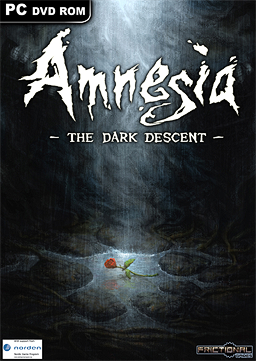 |
| Amnesia: The Dark Descent |
The game tells its brutal and Lovecraftian story through flash backs and diary entries that force you, as Daniel, to remember a past that you obviously didn't want to remember. Although at first glance it seems a little trite, the amnesiac protagonist trope does something very useful to the story: it equalizes your knowledge with Daniel's. Even in a game like Skyrim or Fallout where you have a huge amount of customization available, your character has had a rich life before you got ahold of them. That gap will always insulate you from the character, but because both you and Daniel know exactly as much about Daniel's life as he does that element of separation between you and the character is removed.
Amnesia's story is based on the need to know more and what happens when you learn terrible knowledge not meant for man. This theme is present in the game as the Orb, and the Shadow that kills anyone who attempts to learn its secrets. However, it's also present in what happens to you as the player when Daniel learns more about his past. His past was filled with very unsavory things, and as you continue to uncover them you can't help but feel that you didn't want to know that. What's important is that when you learn that Daniel had done these things, you actually feel a little bad about them because Daniel is a part of "you", to some degree. This makes the first play through so uncomfortable, but the affect does diminish.
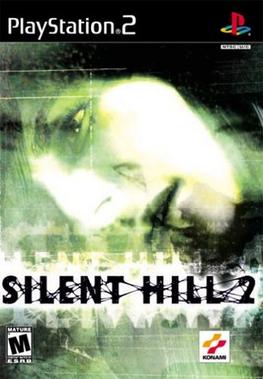 |
| Silent Hill 2 |
While it's not related to self-extension, I think the horror of discovery is worth mentioning because it does play such a huge role in making these two games psychologically disturbing, and plays to Amnesia's Lovecraftian theme. While everything in both games is pretty messed up on its own, it's passive: the monsters are just being presented to you. Discovery is active: when you think about the story while you play, and put James' or Daniel's actions into context and discover for yourself how they relate to the situation. You've been forced to participate in the disturbing realization and that really makes it internal to your thoughts...you've been incepted except instead of "break up my father's empire", the idea planted in your head is "James murdered his infirm wife and half the monsters in Silent Hill are manifestations of his own sexual guilt.".
In Dead Space, which is a technically wonderful game that I've yet to get around to finishing, the best and most skin-crawling parts are when I see logs with Dr. Kyne or encounter Mercer. It's that feeling of realizing your trapped in a tin can breached to the vacuum of space with an absolutely insane and truly zealous adherent of some Necromorph religion. Unfortunately, what should have been gut-wrenching tension spent most of the game as frustrated nervousness because everything is a jump scare and Necromorphs kept sneaking into my camera's blind spot and eviscerating me in one blow. I did the same battle probably close to 20 times before I finally got through it, that made it annoying and not scary. The game thought the monsters were creepier than their story, so I had to get through them before continuing the story and that ruined the atmosphere. Nothing takes you out of the immersion like a game-over screen every few minutes for a few hours.
Anyway, those are just some ideas I had. What do you think?
Friday, May 11, 2012
Horror games only work if you want to keep playing
I don't often discuss games publicly because I just don't feel qualified to talk about most aspects of them with any sort of authority. However, horror games are definitely something I feel like I understand, since I spend so much time talking about horror outside of games.
Recently, someone on reddit.com/r/horror posted a link to a small game based on the horror/creepypasta project called "The SCP Foundation". The game is specifically based on SCP-087, the code name given to a bottomless stairwell located at an unnamed college campus, and is one of the most terrifying games that I have ever played. I'm not lying when I say I lost sleep because of how deeply frightened I was after playing this game for like 20 minutes at 3 in the afternoon. This is despite the fact that it has maybe 3 distinct textures that don't even wrap correctly, no story beyond the SCP itself, and seems to have been made in spare time then released for free by a bunch of guys from 4chan's /v/ board. I noticed something interesting about what exactly made it so compelling and horrifying at the same time and I wanted to talk about it.
SCP-087 is cheap and ugly but it is, knowingly or not, a brilliant exercise in purely experiential gaming. Video games, while generally being pretty immersive always break that immersion in a very fundamental way: You aren't your character. You always know something or see something your character doesn't, and the disconnect is either integral to the story or the gameplay. It's either creating tension by giving the players knowledge of events that affect the character but that the character doesn't know, or assisting gameplay by giving the character knowledge or skill that the player doesn't know about until told. I can't think of very many games that have stories that are told entirely during the run time by what happens to the character. Maybe some of the early FPS games that are more about the run-and-gun experience and don't need more than a very simple story.
The story frames the experience, but a story needs characters so in order to exist in a story you have to have a vessel to act through, and this will always be not-you. The horror you experience in these cases is a lot more like the horror you get when you're really immersed in a movie or a book. It can be really terrifying but there's always a comfort in the fact that it's happening to a character in a story, not you. The eventual resolution of the main plot is also a satisfying experience which gives you a nice payoff.
By doing away with an in-game story SCP-087 has removed the need to have a character for you to act through. By not having any sort of goals, the game no longer needs any of the traditional mechanisms for interacting with the player so it has no options, no HUD, no inventory or anything. With all of this out of the way there's nothing separating you from your in-game self, for all intents and purposes you are in the game and that makes it uniquely terrifying. There's no more disconnect, or comfort because this is all happening to a character.
In most other games, horror or not, the motivation to keep playing the game comes from a desire to reach the end. If a game is too long, without giving us anything new most people will stop playing, but if a game continues to weave new and interesting events into the narrative people will just keep playing. Look to RPGs, especially Mass Effect and Fallout for evidence of this. A game like Amnesia uses this to great effect since as you go on you learn more and more about Daniel's past and experience the dawning realization that Daniel has done horrible things. The very act of continuing the story contributes to the horror of the experience and also has the effect of strengthening the player's resolve to reach the end-game and take revenge on Alexander.
SCP-087 doesn't have an end game, but you keep playing beyond the point where you've seen everything because you want to continue the experience. I had always thought a good horror game relied on a compelling story and a great player character, with mechanics and visuals that supported the themes of the game, but now it seems like everything else is just a means to an end because you can have a truly terrifying game without any characters or story.
This just goes to further my theory that major studios simply can't produce a good horror game anymore, because how on Earth would you market a game without characters or a story?
Games are weird, man.
--PXA
Recently, someone on reddit.com/r/horror posted a link to a small game based on the horror/creepypasta project called "The SCP Foundation". The game is specifically based on SCP-087, the code name given to a bottomless stairwell located at an unnamed college campus, and is one of the most terrifying games that I have ever played. I'm not lying when I say I lost sleep because of how deeply frightened I was after playing this game for like 20 minutes at 3 in the afternoon. This is despite the fact that it has maybe 3 distinct textures that don't even wrap correctly, no story beyond the SCP itself, and seems to have been made in spare time then released for free by a bunch of guys from 4chan's /v/ board. I noticed something interesting about what exactly made it so compelling and horrifying at the same time and I wanted to talk about it.
SCP-087 is cheap and ugly but it is, knowingly or not, a brilliant exercise in purely experiential gaming. Video games, while generally being pretty immersive always break that immersion in a very fundamental way: You aren't your character. You always know something or see something your character doesn't, and the disconnect is either integral to the story or the gameplay. It's either creating tension by giving the players knowledge of events that affect the character but that the character doesn't know, or assisting gameplay by giving the character knowledge or skill that the player doesn't know about until told. I can't think of very many games that have stories that are told entirely during the run time by what happens to the character. Maybe some of the early FPS games that are more about the run-and-gun experience and don't need more than a very simple story.
The story frames the experience, but a story needs characters so in order to exist in a story you have to have a vessel to act through, and this will always be not-you. The horror you experience in these cases is a lot more like the horror you get when you're really immersed in a movie or a book. It can be really terrifying but there's always a comfort in the fact that it's happening to a character in a story, not you. The eventual resolution of the main plot is also a satisfying experience which gives you a nice payoff.
By doing away with an in-game story SCP-087 has removed the need to have a character for you to act through. By not having any sort of goals, the game no longer needs any of the traditional mechanisms for interacting with the player so it has no options, no HUD, no inventory or anything. With all of this out of the way there's nothing separating you from your in-game self, for all intents and purposes you are in the game and that makes it uniquely terrifying. There's no more disconnect, or comfort because this is all happening to a character.
In most other games, horror or not, the motivation to keep playing the game comes from a desire to reach the end. If a game is too long, without giving us anything new most people will stop playing, but if a game continues to weave new and interesting events into the narrative people will just keep playing. Look to RPGs, especially Mass Effect and Fallout for evidence of this. A game like Amnesia uses this to great effect since as you go on you learn more and more about Daniel's past and experience the dawning realization that Daniel has done horrible things. The very act of continuing the story contributes to the horror of the experience and also has the effect of strengthening the player's resolve to reach the end-game and take revenge on Alexander.
SCP-087 doesn't have an end game, but you keep playing beyond the point where you've seen everything because you want to continue the experience. I had always thought a good horror game relied on a compelling story and a great player character, with mechanics and visuals that supported the themes of the game, but now it seems like everything else is just a means to an end because you can have a truly terrifying game without any characters or story.
This just goes to further my theory that major studios simply can't produce a good horror game anymore, because how on Earth would you market a game without characters or a story?
Games are weird, man.
--PXA
Subscribe to:
Posts (Atom)
